Category Archives: Daily Scripture Reflections

THE BODY AND BLOOD OF CHRIST: 11 June 2023

WE BECOME WHAT WE EAT
Deuteronomy 8:2-3, 14b-16a; 1 Corinthians 10:16-17; John 6:51-58


We give a lot of thought to the food we eat. And that’s good because our diets significantly affect our lives and the planet. In many ways, we become what we eat.
We need to pay attention to our spiritual diets because these affect us even more. Our minds gnaw at the stressors in our lives and soon we find we’re consumed by them. The media constantly bombards us with quick-fix ads, hateful speech, and violent entertainment; social media could give us even more negativity. It’s so easy for us to become angry, bitter, and materialistic. In the spiritual sense, it’s even more true – we become what we eat.

The readings on the Solemnity of the Body and Blood of Christ highlight the importance of spiritual nourishment.
Jesus’ teaching in the Gospel takes place at the beginning of the feast of unleavened bread, which recalled how God nourished the people with manna and with his word in the desert (cf. first reading). While reiterating that memory, Jesus emphasizes that the bread he gives is different from the manna in the desert!

  • The manna that was not eaten within the day had to be thrown away; it was no longer any good. After Jesus fed the five thousand, twelve baskets of fragments were gathered and saved; this indicates that this bread lasts.
  • The manna was limited and only for the Jews. The bread which Jesus gives is for always and for all people.
  • The manna nourished the people only during the journey to the Promised Land. The bread of life nourishes us with eternal life.
    Jesus emphasizes that whoever eats his flesh and drinks his blood has eternal life. We become what we eat!

St Paul, in the second reading, reminds the people of Corinth about the significance of the Eucharist. By participating in the Eucharist, we become the body of Christ; we become one. We become—or we ought to become—what we eat.

Jesus nourishes us for always by giving us his word, and his body and blood.
Am I satisfied with the junk food the world offers or do I feast on Jesus the Word and the Living Bread?
Do I live in communion with those around me or is the Eucharist only a ritual act I perform?

By: Fr Dr Mascarenhas Vinod SDB

THE MOST HOLY TRINITY: 04 June 2023

GOD LOVES AND FORGIVES
Exodus 34:4b-6, 8-9; Daniel 3:52-56; John 3:16-18

Thomas Edison was working on his crazy contraption: the “light bulb”. It took his team twenty-four hours to put together each bulb. Once, after the team finished crafting a bulb, Edison gave it to a boy to carry up to the storeroom. The youngster took each step with extreme and watchful caution. At the top of the stairs, he dropped the priceless piece of work. When the team finished the second bulb, after twenty-four hours of work, and it had to be carried upstairs to the storeroom, Edison gave it to the same boy!

Why would Edison forgive someone who destroyed his handiwork? It’s bizarre. It defies understanding.
So does the reality that our God always forgives us though we constantly and repeatedly destroy his handiwork.

The readings on Trinity Sunday are not incomprehensible theology explaining the doctrine of the Trinity. They highlight something more incomprehensible and yet deeply consoling and hope-filled: God’s forgiving love! His love is not a sentimental love but a non-condemning and forgiving love.

The first reading describes the incident after the debacle of the golden calf. God is willing to renew the covenant with Israel despite its incessant infidelity. Why? He tells Moses that he is “a merciful and gracious God, slow to anger and rich in kindness and fidelity.” This succinct poetic description of God is an oft-repeated statement of Israel’s belief and describes God’s relationship with his people, one which is portrayed right through the Old Testament.

The gospel is a summary and the core of the Good News! Jesus tells Nicodemus that God sent his Son not to condemn the world but because he loved the world. Through his entire life and ministry, Jesus lived out this core of the Good News – he sought out the sinner and the outcast.

Grappling with the mystery of the Trinity – three persons, one God – is tough. It’s tougher to live out the mystery of the Trinity: to love as God loves, to forgive as God forgives. And yet this is what God calls us to do.
In the second reading, Paul gives us a program to imitate our Trinitarian God: “Encourage one another, agree with one another, live in peace.”
Do I forgive and love like God does? Whom will I forgive and love in the week ahead? How will I encourage and live in peace?

By: Fr Dr Mascarenhas Vinod SDB

PENTECOST SUNDAY : 28 May 2023

SHAPED BY THE WIND OF GOD
Acts 2:1-11; 1 Corinthians 12:3b-7, 12-13; John 20:19-23

A parish priest narrates a conversation he had with a funeral director about the effect the wind has on things! The director said that, over time, trees that stand out in the open become shaped in the direction the wind is blowing. Unless there are other trees around to block it, a tree will eventually be shaped by the force and direction of the wind. Then, the funeral director began to point out tree after tree that had been shaped in this way; the cemetery was filled with them! All shaped by the wind!

Something similar happened to the disciples on the day of Pentecost. They were shaped by the wind of God—the Holy Spirit.
The apostles were afraid after Jesus’ crucifixion and confused after his resurrection. They shut themselves “in one place together”; there’s safety in numbers, I guess!
At Pentecost, the wind of God blew “like a strong driving wind” and shaped the disciples in three ways:

  • from being fearfully behind closed doors, they moved with bold freedom into the open;
  • from being silent spectators, they became vibrant and fearless preachers of the gospel;
  • from being a cluster of individuals, they became a community and a church with a definite mission and mandate to be agents of peace and reconciliation.

The same Spirit—which Jesus “breathed on” the apostles and which descended on them “like a strong driving wind”—is with us. He helps us move from fear to freedom; from silence to proclamation; from being individuals to being community; from division to reconciliation… when we stand out in the open and allow ourselves to shaped by the wind of God.
Do I as an individual, and we as a congregation, show any evidence of being shaped by the wind of God’s Spirit? If not, what blocks the action of the Spirit in my life?

By: Fr Dr Mascarenhas Vinod SDB

Trinity Sunday, 30 May 2021

CELEBRATE-IMITATE OUR 3-IN-1 GOD
Deuteronomy 4:32-34, 39-40; Romans 8:14-17; Matthew 28:16-20

Multi-tasking is a way of life today… with many multi-function devices to help us! Think about the 3-in-1 stylus-laser pointer-pen. AIO printers print-copy-scan-fax. Today’s smartphones do virtually everything! With all these multi-functioning devices, it shouldn’t be difficult to accept the notion that one God can exist as three persons!

Our God is “multi-function” (though we ought not to reduce God to function)! It is proper to attribute the work of creation to the Father; the work of healing and redemption to the Son; and the work of guidance to the Spirit. Three unique persons with three distinct functions!

These unique persons live in community. God is a family!

John’s Gospel highlights the fundamentally social/communitarian nature of God. John 1:18 speaks of the “Son who is close to the Father’s heart.” John 10:30 reads: “My Father and I are one.” In John 6:20, Jesus tells his disciples: “It is I (in Greek I am), do not be afraid.” In five other places, Jesus uses the absolute “I am”, which recalls Exodus 3:14, where Yahweh revealed his name to Moses: “I am who am.”

The Greek Fathers use the word perichoresis (“dancing together”) to describe this loving communion of the Trinity. The Father, Son, and Spirit live in perfect communion, which is essentially a “being there” for one another.

What are the implications of the doctrine of the Trinity for us?

Created in the image and likeness of a trinitarian God, we have similar attributes!

First, we are unique; we want to be recognized and accepted as individuals. We don’t want to be clones.

Second, we desire to be in community/communion. This is achieved not by negating/denying differences, but by respecting and nurturing our diversity, and blending our differences.

Third, like the Father, we are called to be creative and to contribute to building up. Like the Son, we are called to reconcile and to mend broken relationships. Like the Spirit, it is our task to teach and to dispel ignorance.

More important than understanding the doctrine of the Trinity is to experience and imitate our Trinitarian God.

How will I live out the doctrine of the Trinity in my life: will I respect myself and others as unique persons, and form communion and community by blending differences? Will I become a creative contributor, healer, and guide?

May we celebrate and imitate our 3-in-1 God!

(By Fr Vinod, Rector and Secretary of INB Province)

The Ascension of the Lord

THE ASCENSION
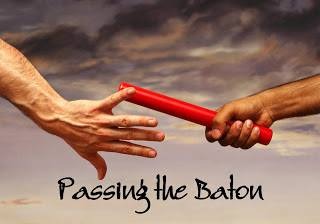
PASSING THE BATON
Acts 1:1-11; Ephesians 1:17-23 or 4:1-13; Mark 16:15-20

The 4×100 relay is thrilling. The most exciting/important time is the baton exchange; many a race has been lost because of poor baton exchange. Since 1988, US quartets have been disqualified or haven’t finished the event nine times at the World Championships and the Olympics – even though they had the fastest runners – because of foul ups at baton exchanges.

The Ascension is Jesus passing the baton to his disciples in the great human and Christian race. He has prepared them over three years and especially over the 40 days after the resurrection. It is time for them to take over.

The ascension completes Jesus’ leg of the relay and his mission on earth to bring the good news to the afflicted, liberty to captives, sight to the blind – in short, to bring wholeness to people.

The ascension begins the disciples’ part of the relay: “Go into the whole world and proclaim the gospel to every creature.” Mark establishes an immediate connection between Jesus’ ascension and the disciples’ mission: “So the Lord Jesus… was taken up into heaven… But they went forth and preached everywhere.”

This continuation of the mission is a massive challenge. But the Lord assures us that he is with us through his Spirit.

The scene from the Acts, in today’s first reading, is modelled on the experience of Joshua and Elisha. Joshua received a share of Moses’ spirit and Elisha received a double share of Elijah’s. Jesus assures his disciples that they will receive the power to continue his work: the Holy Spirit.

Despite this promise, they remained there “gazing into heaven.” They have not understood that they must look towards the earth – the locus of their mission.

The baton has been passed to us. The mission is ours; the Spirit and power of the Lord are ours. Am I willing to carry the baton and run my leg of the race? How will I continue Christ’s mission in the area in which I live and work?

PS: It takes time and practice for relay teams to run well. US national teams have little of that; the relay is an all-star team that rarely runs together. I need time with the Lord to receive the baton; I need to be in the correct “exchange-zone”; I need to run with the team… always!

(Fr Vinod SDB, Rector and Secretary, Don Bosco Provincial House, Mumbai)

Easter Week VI, Sunday 09 May 2021

TOTAL SELF-GIFT
Acts 10:25-26, 34-35, 44-48; 1 John 4:7-10; John 15:9-17

In his book “Love is a Costly Thing”, Dick Hillis describes a mother he encountered during a trip to Africa: “She was lying on the ground, holding a tiny baby in her arms. I put a cooked sweet potato into her hand; it was all I had. Her strength was almost gone, but her tired eyes acknowledged my gift. Taking a bite, she chewed it carefully. Then, placing her mouth over her baby’s mouth, she forced the soft warm food into the tiny throat. Although she was starving, she used the entire potato to keep her baby alive. Exhausted from her effort, she dropped her head on the ground and closed her eyes. I later learned that during the night the mother’s heart stopped, but her little girl lived.”

Love is costly; it cost that mother her life. Her love was a self-sacrificing love, which mirrored God’s love for us that Jesus speaks about in the Gospel and John writes about in the Second Reading.
God manifests his love for us by gifting us his only beloved Son (second reading).
In the gospel, Jesus tells his disciples that he has loved them as the Father has loved him and gives them the new commandment of love: “love one another as I have loved you.”

That last part is the toughie: “as I have loved you.” How has he loved us?
He loves us gratuitously. The gift of God’s love is just that—a gift, not a prize won, not a reward for service.
He loves us as a friend. Servants work definite hours, and often do things only because they receive an order. Friendship goes go beyond; it entails mutual fidelity and loyalty, it is open-ended.
He loves us totally. Throughout his life, he lovingly served his fellow human beings. He gave his body and blood at the Last Supper and sacrificed his body and blood at Calvary.

For Jesus, love is not a mere liking for another; it is a total self-gift. And he exhorts us to love in the same manner.
Will I love gratuitously, as a friend without counting the cost, and totally?

(By Fr Vinod SDB)

22 Week: Thursday 3 September 2020

Readings: 1 Cor 3:18-23 and Lk 5:1-11
Memory of St. Gregory the Great
The Great catch!

“Because of Your Word I will cast the nets”. These words were the meaningful reply of Peter to Jesus in the Gospel of today. But what word? And with what authority? This reminds me of a Priest, who was well known for his pastoral work in the field of family counselling, was asked by a little boy: Father, how can a priest, not married, can give so much of advice to couples without the experience of married life. This is quite similar to the Gospel narration of today. Jesus without any experience of fishing, but with authority like a master tells the well experienced fishermen to cast the net to the deep (duc in alto). Peter and his companions could have laughed at him or ignored his indications, but Peter with great admiration and humility accepts this challenge to go further into the deep waters. They, initially manifested and expressed their failed attempts saying that they worked the whole night tirelessly, but the result was unsatisfactory. They gave a try to the words of Jesus and the result was unimaginable. It was certainly a great Catch. They even had to call other fishermen to pull the net ashore with great quantity of fish. This incident led them to a high admiration for Jesus and greater faith in him. 

Dear brothers and sisters, in the fishing of our life, if we are longing for a great catch, we have to listen and put into practice His Words.  Because His Word can guide and enlighten us from darkness into great ray of hope. It is not a question of professional qualification or hours of hard work that matter but a having heart full of humility and obedience to listen to Jesus and the ability to follow his words and deeds. The man, alone in his tasks, becomes weary in vain: “If the Lord does not build the house, his builders labour in vain” (SI 127). But if he welcomes the inspired Word, he will receive abundant help from the hand of God.

This is the same Word that encourages us today to move forward in our life, in our fishing, in our struggle for peace and profound happiness. Going to deeper waters means for us to seek more knowledge of God, of His Law, of His teachings etc.  The more we immerse ourselves in the Gospel, in the Scriptures, the more we will find answers to our questions, to our anxieties. Man is a being created by God with the aim of living in harmony with Him and with others and this will only happen when he throws himself into the arms of God’s merciful love. Jesus also calls you and me to be fishers of men! He provides the fish for us, but he needs our nets in order to take for Him souls in need of salvation. May our fishing be fruitful and not be restricted to our circle of friendship. Jesus wants us to be fishermen in His Kingdom and the net He gives us is His love and His Word. Do not be afraid! From now on, you will be fishers of men! That’s what Jesus does with you here and now.

With great joy and hope, we have entered in the month of September dedicated to the Word of God (Bible). His Word is a lamp of my steps and light of my path. (Psalm 119). Let us not allow this month to go by without giving little more attention to the Word of God and its influence in our life. Let us remember that the Great Catch depends on our eagerness to  listen to Jesus.   

(By Fr. Jojo Kachappilly SDB)

Thursday 20th August 2020

Today the Church keeps the memory  of St. Bernard. Religious Orders, like the people of Israel, had their ups and downs, days of fervor and days of  laxity.  The monastery of  of Citeaux was founded for  the purpose of bringing the Benedcitine Order back to its original life of poverty and religious discipline. In 1112 Bernard joined this monastery  along with  four of his brothers and twenty four friends. Bernard took his religious life and duties seriously, so much so, that after three years of life in the monastery at Citeaux  he was asked to go and start a monastery at Clairvaux. He remained here all his life and  was able to found 68 other Cistercian monasteries. He was a man of wisdom and extraordinary piety. His devotion to the Mother of God was outstanding. It is he  who composed that beautiful prayer to Our Blessed Lady, The Memorare ( Remember, O Most gracious Virgin Mary).

The reading from Ezekiel affirms once again the mercy of God. When his  people went the wrong way he sent Prophets to call them back. When they refused to listen to them, he  had recourse to sterner measures to bring them back, like sending foreign armies to conquer them and lead them away into exile. These harsh punishments he used out of love for his people, to get them back to acknowledge him as the only God and  worship him.  In the readings before these we find God as a threatening God, a punishing God. But here God shows himself as a merciful God. “ I mean to display the holiness of my great name, which has been profaned among the nations, which you have profaned.”

“I am going  to gather you together”, “I will pour clean water ove you” all these words are words of assurance of God’s love for the people.

When we commit sins, God  will deal with us in the same way. He will call us back gently, but if we do not listen to his whispering voice he will send sufferings into our life not to crush us but to wake us up from our slumber in sin and put us back on the way of holiness.

            I knew a young man, called Charles, in Kohima. He had studied in Don Bosco Schools and graduated  from St. Anthony’s college in Shillong. He had been an exemplary Catholic all along, a daily communicant. But as he got a government job in Nagaland and money came into his hands, he  forgot his Christian duties and got into dangerous bad habits. One day in a drunken state he was driving his jeep from Mokokchung  to Mariani.  At one moment he lost control of the jeep and rolled down the hill. The result was a broken spine. He was bed ridden for three years. I used to visit him to hear his confession and give him communion. In one of the last visits he became very emotional and said something that touched me deeply.

He said, “ Father I do no know how I forgot God, but God did not forget me. When my body was alright my soul was dead, but  now that my body is broken my soul has come back to life.” Only  one who trusted in the love of God could have said those words about an accident that broke his spine. And indeed he  came back to God and died a holy death and I conducted his funeral.

And I  have no hesitation to say that God allowed him to fall into that accident only to bring him back. God’s punishments are loving  reminders calling us back to our promise to be faithful to him.

            But unfortunately many look upon these reminders of God as a sign of God’s  anger rather than a sign of his love. And instead of accepting his invitation to put on the wedding garment and sit with him at the wedding table, they keep  running after other occupations. They prefer to sit in the pig sty and eat the good given to the pigs than enjoy sumptuous meal the Father is serving for his dear children.

            God is calling us back, as he called back the people of Israel. Let us not harden our hearts, but rather listen to the loving invitation of the Father to come and take part in the wedding feast he has prepared for us.

Wednesday 19 August 2020

The memory of St Eudes tells us that God even now cares for his Church as he cared for the people of Israel. As he sent prophets to remind Israel about their duty to God, we find in time of need in the Church God sending saints to remind the Church about things that seems to have been forgotten. When there was so much social difference between the rich and the poor, God sent  St. Dominic  who was able to bring the two groups together and proclaim that in the sight of God we are all Children of God, that there should no difference between the poor and the rich.

When the Church became rich and poverty was forgotten God raised up St. Francis of Assisi to remind the believers that the Church of Christ is the Church of the poor.

When young boys were roaming the streets of Turin with no one to care for their material welfare nor their spiritual needs, God raised up St. John Bosco who provided them food, shelter and a good education along with instruction in the Catholic faith.

St. John Eudes (1601 – 1680) was born at a time when the Church in France was corrupt and in many ways a source of evil rather than good. There were the rich clergy who enjoyed all the privileges and the poor clergy deprived all privileges had to face untold difficulties to fulfil their duties as pastors of souls. The people, in general, were poor, superstitious and oppressed. To this was added Jansenism that taught that the body was evil and salvation practically unattainable.

In the face of such existing problems, St. Eudes set up Seminaries to educate the clergy and prepare them spiritually and intellectually to help the people to come out of their ignorance and superstition. This common training given to both the rich and poor also removed, in some way, the difference that existed among them.

Over and over again we find God’s grace acting through people like St. John Eudes. They do not stand outside and complain or run campaigns, they go in and do things, remove the mould of the worldly corruption and bring the Church back to what Christ wanted it to be.

We ought to pray for such leaders and saints even for our times too when there are so many Christian sects fighting one against other and giving the world a wrong impression of the Church that Jesus founded.

We spoke about the situation of the clergy in France at the time of St John Eudes, the corruption, ambition for worldly power (cardinals were leading the army in battle) disregard for and oppression  of the poor. Ezekiel complains about the corruption of the shepherds, religious leaders who were called by God to look after his sheep (the people of God.) But they were looking after themselves and neglecting the sheep. God was not happy with these shepherds. The Lord says this: “I am going to call the shepherds to account. I am going to take my flock back from them. I am going to look after my flock myself.”

Today’s first reading is an examination of conscience for those entrusted with the care of souls in the Church. To be a priest is an honour, priesthood gives one a lot of privileges. But these privileges are given not to make one’s life comfortable, but to care, with more dedication, for the welfare of the people entrusted to their care. “I must decrease, they must increase” and not the contrary.

God has entrusted us with care for the people. Can he trust us? In our position as pastors, what is our priority, the welfare of the people or our welfare?

In the daily Mass the priest and the people are able to witness the love of Christ for them. He becomes bread, food, for the people. Everyone taking part in the Mass is asked thus to become bread for others. Unless we are ready to give ourselves, our time and talents, our health and wealth for the welfare of others we will not become like Christ who gave himself totally as food for each one of us. If the Mass we hear daily can thus change us, it will make us saints.

The Gospel wants to tell us, that in the sight of God, it is not the amount we do that counts but the love with which we do even the smallest thing. We have different groups of people in the gospel, who began the work in the field some in the third hour others in sixth and the ninth hour. And finally, those who were called at the 11th hour. It is unthinkable for an owner of the fields to call someone at the 11th hour and pay him a full day’s wage, nay, no one will call workers at the 11th hour.

Those who were called third, sixth and ninth hour worked for the wage promised by the landowner. Those called in the 11th hour were grateful to the owner for calling them at that hour and they worked more out of love for the kind owner than for the wage they would get.  The Master paid the first three groups for the work they did, and he pays the last group for the love they showed.

We do a lot of work, how much of all these is done out of love for God? Aren’t we working for our advantage, for the money we get, for the praise we get, for the appreciation from people? Do we expect God to be generous with us when we are not generous toward him?  Let love for God be the motive behind every action you do, and you will experience his generosity, as did the people who came to work in the field at the 11th hour.

(By Fr. Tom Karthik SDB)
Tuesday 18 August 2020

The Church today honours a Saint little known to us. She is from Madagascar and her name is Blessed Victoria Rasoamanarivo (1848 – 1894) just 46 years old. She belonged to a powerful family, educated by the Jesuits and the sisters of the congregation of St. Joseph of Cluny. Her Catholic education made a strong impression on her and she asked to be received into the Church, against the wishes of her parents. When persecution against the Church broke out in her country, her parents persuaded her to return to her pagan religion, but she refused. On the contrary she asked to become a religious, but the sisters, knowing her family background thought it prudent not to accept her.                

She was given in marriage to the son of the Prime Minister, who was also an important army officer. He was a violent alcoholic. To live with him was martyrdom for her. Though her parents urged her to divorce him and come back to her family she refused. She held that Christian marriage is indissoluble. Her exemplary Christian life gained her the admiration of the court and the people. This made her a providential support for the Church after the expulsion of the Catholic missionaries. She publicly defended the Church and kept the faith of the people alive in the midst of persecution. When the missionaries returned in 1886 they found a vigorously flourishing community of Christians, thanks to Bl. Victoria’s virtue and steadfastness. She prayed for her husband and God heard her prayers and he asked for baptism before his death in 1888 because of an accident.

She died in 1894 on 21 August and was beatified by Pope John Paul II in 1989.

In the first reading Ezekiel predicts the anger of God against the ruler of Tyre for his pride and arrogance for claiming to be God. “I am god; I am sitting on the throne of God surrounded by the sea.” The first commandment of God forbids us to give to anyone or anything else the honour due to God. God will not tolerate idolatry. The king of Tyre makes himself god which is worse than honouring someone else as god. Therefore, God vows to send enemies against him to teach him a lesson to throw him down into a pit and die a violent death.

Do we worship other people or other things in the place of God? Many will say ‘No’ But then ask yourself, “To what do you give most of the 24 hours God gives you every day?” And how much time do you give to God?
Some children get up early in the morning to go for tuition. Ask them to come and spend half hour to attend Mass or say their prayers, they will say ‘I have no time.’ Some sit in front of the mirror beautifying themselves or admire their beauty, but they have no time to beautify their soul, or to look at God who gave them, not only their beauty, but everything they have. Whom do we worship, God or something else? Let the response to the Psalm strike a bell in our hearts, “It is the Lord who deals death and life.”

Jesus tells us about the danger of too much wealth. Wealth we all need to live our earthly life, but too much of it, and spending our life only to amass wealth, will make us forget God. That is why Jesus says, “It is easier for a Camel to pass through the eye of a needle than for a rich man to enter the kingdom of heaven.” When our hearts are set on riches, they become our gods, we become idol worshippers and we forget the God who created us and on whom we depend. Do not make wealth your God, rather use the wealth that come into your hands to serve God more earnestly and to care for those who are poor and needy. It is in our power to make wealth a means for our salvation or make it a reason for our damnation.

(By Fr. Tom Karthik SDB)